Tree trimming and pruning: when to DIY and when to call a pro
By Elena Okafor · Updated 2026-06-20
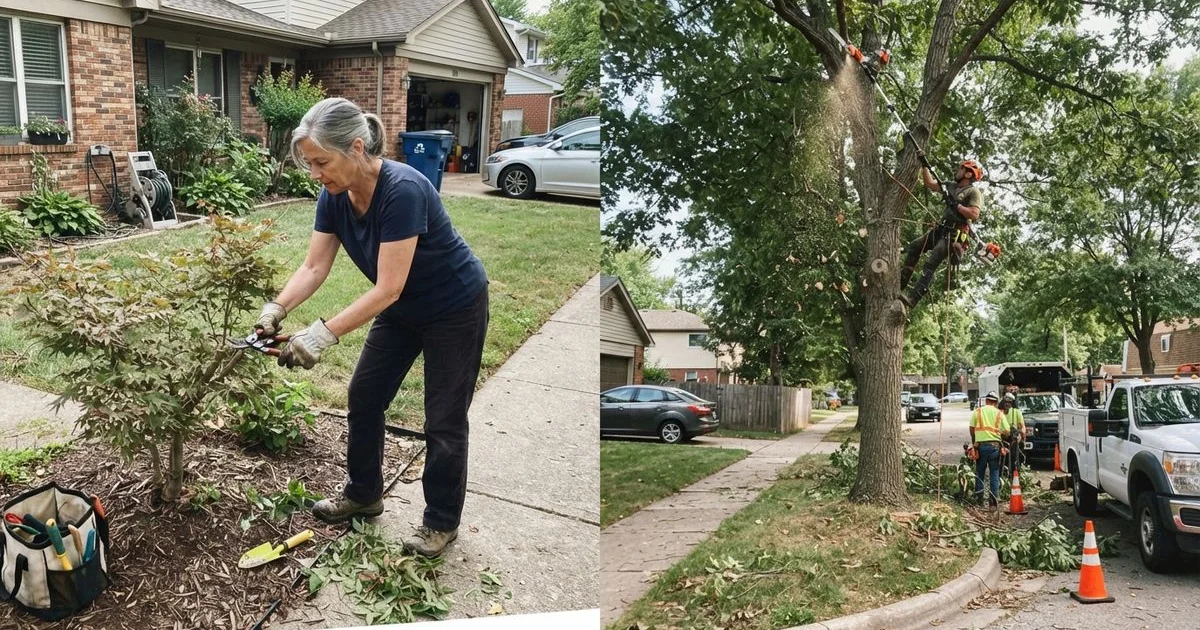
Trimming a low branch off a small ornamental tree and trimming a storm-damaged limb 40 feet up a mature oak both get called “pruning,” but they belong to two entirely different skill categories. The line between them is worth knowing before you grab a ladder, because the wrong side of that line is where most tree-related injuries happen.
What’s genuinely safe to DIY
A few situations are reasonable for most homeowners to handle without hiring a tree trimming and pruning crew:
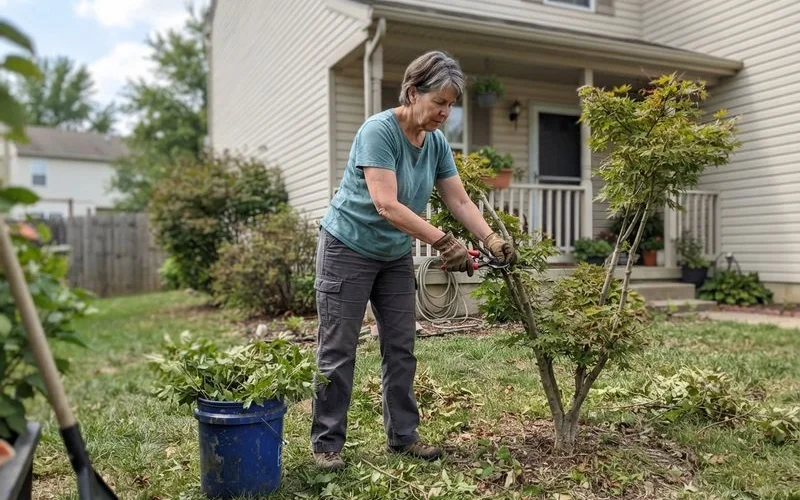
- Small ornamental trees and shrubs you can reach standing on the ground or a stable step stool.
- Suckers and water sprouts growing from the base of the trunk or along lower limbs.
- Light deadwood removal on branches within easy reach, using hand pruners or loppers.
- Young trees still being shaped, where cuts are small and mistakes are easy to recover from.
If you’re doing any of this, clean, sharp tools matter more than most people expect. A dull blade crushes the branch instead of cutting cleanly, which slows the tree’s ability to heal over the wound.
When it’s a professional’s job
- Anything requiring a ladder near a roofline, since a fall from height with a cutting tool in hand is a serious injury risk.
- Branches near or touching power lines, full stop. This is not a DIY situation under any circumstances.
- Overhead chainsaw work. A chainsaw above shoulder height, especially while balanced on a ladder, is one of the more dangerous combinations in home maintenance.
- Large limbs that could fall unpredictably, particularly anything with visible rot, cracking, or a hanging break.
- Mature trees needing structural pruning, where the wrong cuts can affect the tree’s long-term shape and health, not just how it looks this year.
A quick way to decide
| Situation | DIY or professional |
|---|---|
| Small shrub or young tree, reachable from the ground | DIY |
| Deadwood on a low, easily reached branch | DIY |
| Anything requiring a ladder near the roof | Professional |
| Any branch near a power line | Professional, no exceptions |
| Large or structural pruning on a mature tree | Professional |
Why bad pruning costs you twice
Trees cut back too aggressively, or cut in the wrong place, don’t just look worse, they heal slower and become more vulnerable to disease and decay at the wound site. This is one of the more common complaints homeowners raise about tree work generally: a tree trimmed more heavily than intended. Getting it wrong on your own tree means living with the result for years, since a tree doesn’t grow back a missing structural branch the way a hedge fills back in.
If you’re set on doing some of the trimming yourself, a good middle ground is asking a professional to handle the higher, riskier cuts while you take care of the lower, easy material yourself. Most crews are used to this kind of split job and can quote it separately from a full-service trim.
What a professional actually adds beyond safety
Beyond avoiding a fall or a chainsaw accident, a trained crew makes cuts at the correct point relative to the branch collar, which affects how well the tree seals the wound. They also know which branches are structurally important to keep and which are safe to remove, something that’s harder to judge accurately from the ground looking up.
If you’re unsure which category your situation falls into, it’s worth a quick call rather than guessing.
Basic gear worth having either way
Even if you’re only ever handling the small, safe stuff yourself, a few basics make a real difference: sharp bypass pruners for anything under an inch thick, loppers for slightly larger branches, and gloves that protect against scrapes without being so bulky you lose grip. Skip the temptation to reach for a chainsaw for a job hand tools can handle; more power isn’t more control, and most DIY pruning injuries happen with tools that were more than the job actually called for.
Timing your DIY pruning
Late winter, while a tree is still dormant but before new growth starts, is generally the safest window for shaping cuts on most deciduous trees, since you can see the branch structure clearly without leaves in the way. Avoid heavy pruning in late summer or fall, which can stimulate new growth that doesn’t have time to harden off before winter. If you’re not sure whether a specific species has a different preferred pruning window, that’s a quick question worth asking a professional even if you plan to do the cutting yourself.
Our methodology explains how we evaluate the tree service companies in this directory, and the home page is a good starting point if you decide the job is one to hand off.
FAQ
- Can I trim my own tree if it's under 15 feet?
- Small trees you can reach from the ground or a short, stable ladder are generally safe to trim yourself with hand pruners or loppers, as long as you're not working near a power line or over a roof.
- What tools do I need for basic DIY pruning?
- Hand pruners for small branches, loppers for anything up to about an inch and a half thick, and a pruning saw for larger cuts. A chainsaw or pole saw pushes the job into professional territory for most homeowners.
- Can bad DIY pruning actually hurt the tree?
- Yes. Cutting in the wrong spot, removing too much at once, or leaving a stub instead of a clean cut near the branch collar can slow healing and invite disease or decay.
- When should I stop and call a professional instead?
- Any time a ladder, a chainsaw overhead, or proximity to a power line is involved. Also call a pro if you're unsure whether a branch is actually dead or just dormant, since removing the wrong wood can set the tree back.