Tree trimming and pruning costs: what really drives the price
By Elena Okafor · Updated 2026-06-11
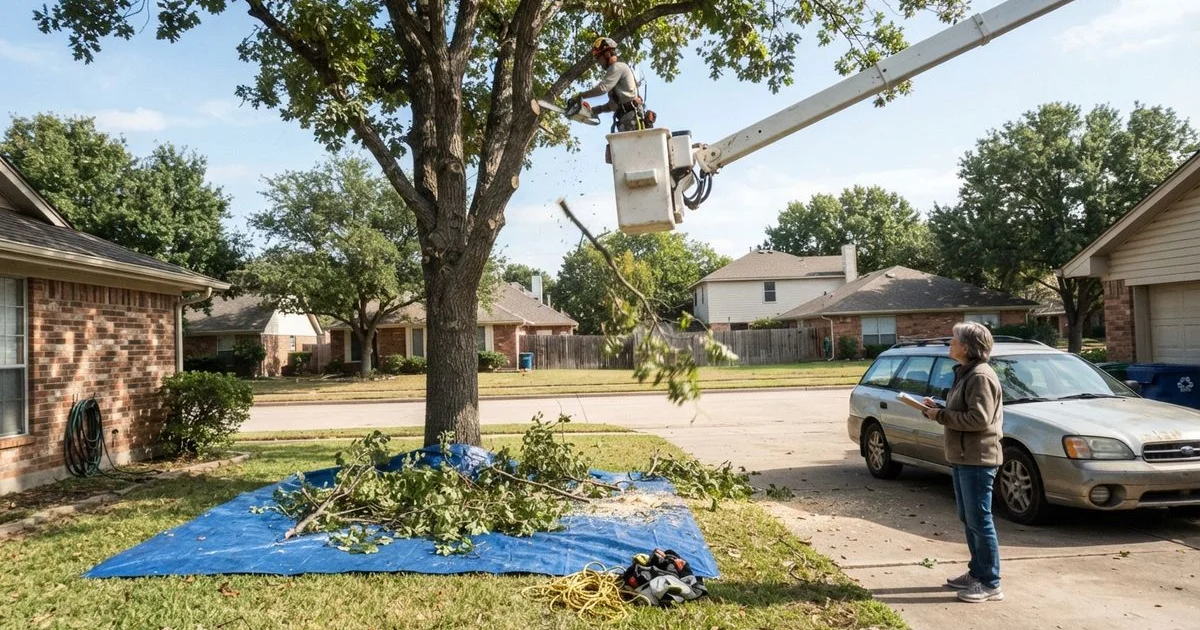
Trimming and pruning quotes swing more than most homeowners expect, and it’s rarely arbitrary. A light touch-up on a young ornamental tree and a heavy reduction on a mature oak with codominant trunks are not the same job, even though both get called “trimming” on the phone. Knowing what actually moves the price helps you read a quote instead of just reacting to the number at the bottom.
The three things that set the price
Ask a tree trimming and pruning crew what they price against, and the answer is consistent across the industry.
- Tree height. A crew working 15 feet off the ground with a pole saw is a different job than one setting ropes and climbing 50 feet up, or bringing in a bucket truck.
- How much is coming off. Light shaping of a few branches costs less than a full crown reduction or removing all the deadwood from a neglected tree.
- Number of trees. Most companies offer a lower per-tree rate once you’re trimming three or more trees in the same visit, since setup and cleanup time is shared across the job.
Access and proximity to power lines or a roofline matter here too, the same way they do for full removal, though the effect is usually smaller since trimming crews aren’t taking down the whole tree.
Typical price ranges
| Trimming scope | Typical price range (per tree) |
|---|---|
| Light shaping, small tree, few branches | $120 - $250 |
| Moderate cutback, medium tree (30 ft) | $300 - $450 |
| Heavy reduction or deadwood removal, larger tree | $500 - $900+ |
Multi-tree jobs on the same property often come in below the sum of these individual ranges, since one crew visit covers all of them.
Why pruning now is usually cheaper than removal later
A tree that never gets trimmed does not stay the same. Deadwood accumulates, weak or crossing branches rub and weaken each other, and structural issues that a pruning visit could correct early can turn into a hazard that requires full removal. Reviews across the region consistently name thorough cleanup and fair pricing as strengths of well-run crews, which suggests routine maintenance visits are generally priced reasonably. Skipping pruning to save money in a given year sometimes means paying for a removal instead of a trim a few years down the line.
Questions worth asking before you book
- What specifically will be removed, and will the crew show you or mark it before cutting?
- Is cleanup and hauling of the trimmed material included in the quote?
- Does the price change if the crew finds more deadwood or structural issues once they’re up in the tree?
- Is the person doing the cutting a certified arborist, or a general laborer working under one?
A company that answers these clearly, before taking a deposit, is usually the safer choice. One recurring complaint in the industry is trees cut back more aggressively than the homeowner expected; asking the crew to walk you through the plan before they start is the simplest way to avoid that.
When DIY makes sense instead
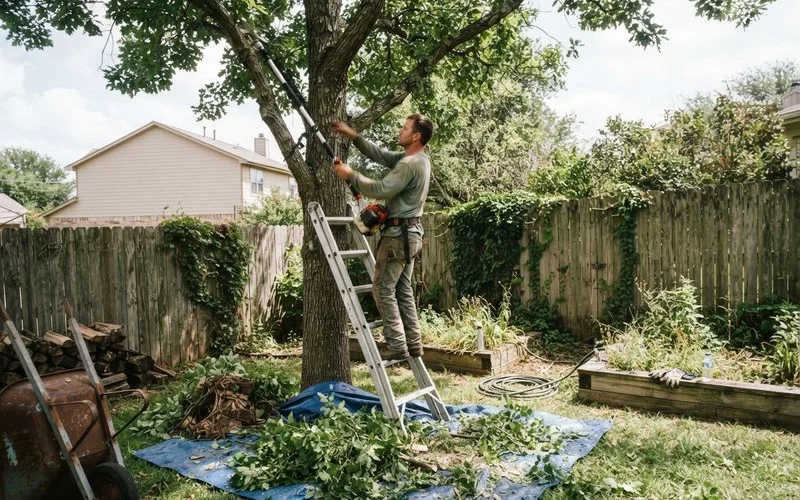
Small ornamental trees, shrubs, and anything you can reach safely from the ground with hand tools are reasonable to trim yourself if you’re comfortable with basic pruning cuts. Anything that requires a ladder near a roofline, a chainsaw overhead, or work near a power line is a job for a professional, both for safety and because incorrect cuts can damage a tree’s long-term health. Our DIY versus professional guide goes through exactly where that line sits.
Pricing varies enough between companies that it’s worth getting two or three quotes for anything beyond routine, ground-level trimming.
How often pruning is actually needed
Most established trees do fine on a two- to three-year pruning cycle for general maintenance, rather than needing attention every year. Younger trees being actively shaped, or any tree with a known structural issue being monitored, may need more frequent visits. A crew that recommends yearly pruning for a mature, healthy tree with no particular concerns is worth a second opinion, since that cadence is more than most trees need and adds up in cost over time without a clear benefit.
Pricing varies enough between companies that it’s worth getting two or three quotes for anything beyond routine, ground-level trimming. Our methodology explains how we evaluate the companies listed here, and you can start from the directory home page to compare a few before you commit to one.
FAQ
- How much does tree trimming cost per tree?
- A light shaping on a small tree can run under $200. A heavy reduction or deadwood removal on a tall tree with several trunks climbs well past $500. Height, the amount of material coming off, and the number of trees all move the number.
- Is pruning cheaper than waiting until the tree needs full removal?
- Usually, yes. Routine pruning is priced by the visit; a tree left unmaintained for years can develop structural problems that turn a trim into a removal, which almost always costs more.
- Do companies charge by the hour or by the job?
- Most Westchester County crews quote a flat price per tree or per job after seeing the work, rather than an hourly rate. Ask up front which method a company uses so you can compare quotes fairly.
- Does pruning cost more in spring than other seasons?
- Demand often rises in spring, which can mean a longer wait for scheduling more than a higher price. Some companies offer more competitive pricing in late fall and winter to fill the calendar.