What to expect during a professional tree removal, step by step
By Elena Okafor · Updated 2026-06-17
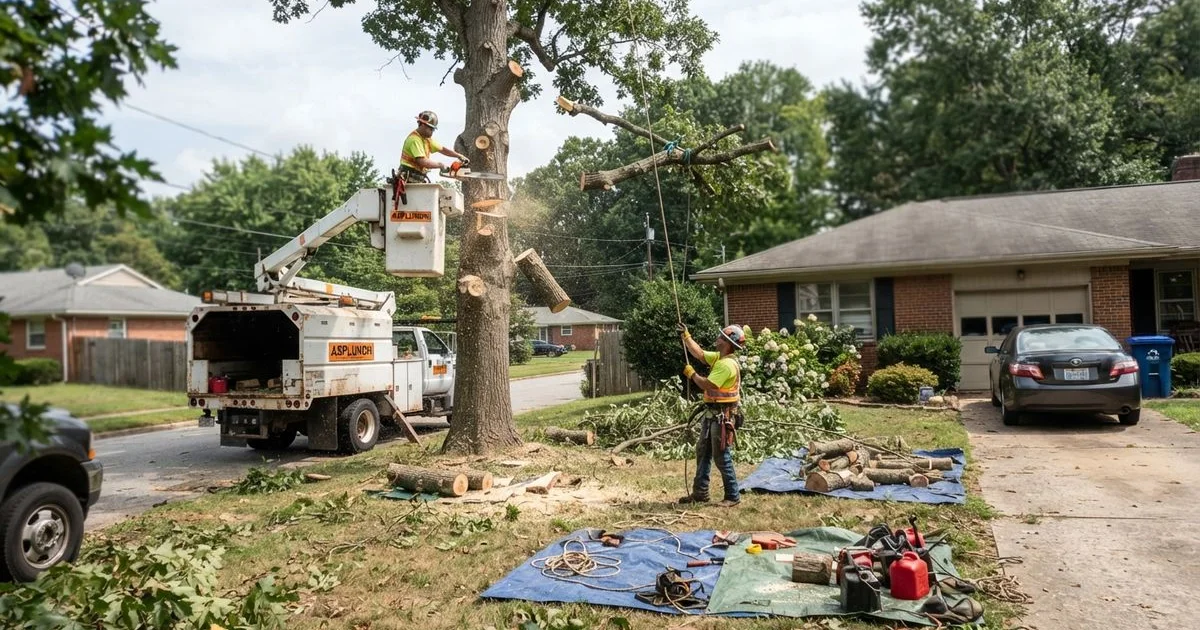
Tree removal looks dramatic from the driveway, but the job itself follows a fairly predictable sequence. Knowing the steps ahead of time makes it easier to tell a well-run crew from one that’s cutting corners, and it helps you plan around the noise, equipment, and driveway access a removal day requires.
Before the crew arrives: the site visit
A legitimate tree removal company will want to see the tree in person, or at minimum detailed photos and measurements, before giving a firm quote. During that visit, they’re checking the same things that drive price: height, trunk diameter, lean direction, access for equipment, and anything nearby, a fence, a shed, power lines, that changes how carefully they need to work. This is also the point to ask about permits if your municipality requires one, insurance coverage, and exactly what cleanup is included.
Day of removal: the typical order of operations
- Setup and site protection. The crew arrives, stages equipment, and lays down protective mats or plywood over lawn or pavement the truck will cross.
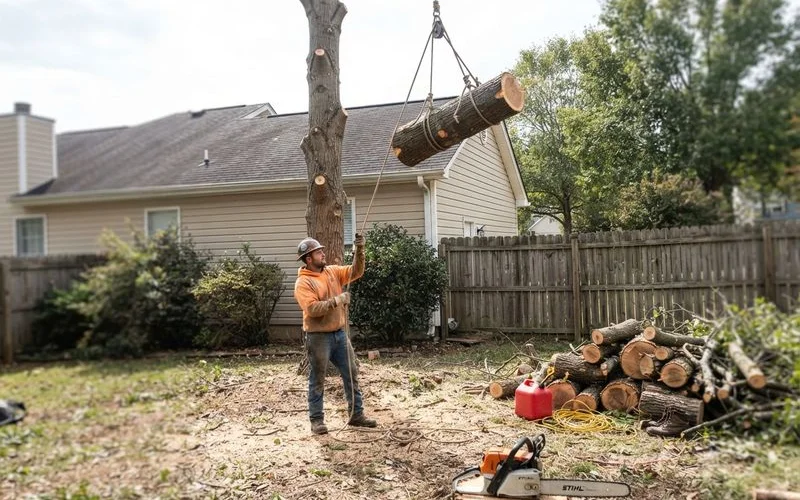
- Rigging or climbing. For trees near structures, a climber sets ropes and rigging to lower branches and sections in a controlled way rather than letting them free-fall.
- Sectional cutting. Large trees come down in pieces, top to bottom, especially when there’s anything nearby that a whole-tree drop could damage.
- The final trunk cut. Once the canopy and upper trunk are cleared, the remaining trunk is felled or cut down section by section, depending on space.
- Cleanup and haul-away. Branches go through a chipper, logs are cut and stacked or loaded out, and the site is raked and checked for debris.
What changes the timeline
| Factor | Effect on timeline |
|---|---|
| Tree height and trunk size | Larger trees take longer to rig and cut safely |
| Access | Tight yards slow equipment staging and debris removal |
| Proximity to power lines | May require utility coordination before work starts |
| Weather | High wind or heavy rain can delay or reschedule the job |
A straightforward removal with open access often wraps up in under half a day. Add power line coordination or a second tree on the same visit, and it’s reasonable for the job to run longer.
Signs of a well-run crew on site
Reviews across the region consistently name thorough cleanup, safe work practices, and professional crews as the biggest differences between a good experience and a bad one. On the day of the job, that shows up in a few visible ways: the crew wears proper safety gear, someone is clearly directing the work rather than everyone freelancing, protective mats go down before equipment crosses the lawn, and the final cleanup includes raking, not just the big pieces.
If a crew skips safety gear, works without a clear lead, or leaves without checking for stray branches and wood chips scattered across the yard, that’s worth noting even if the tree itself came down fine.
After the tree is down
Stump grinding, if you want it, is typically a separate step and sometimes a separate visit. Ask at the time of booking whether it’s included or needs to be scheduled on its own. The crew should also confirm final cleanup expectations before they leave: are chips staying on-site, is the wood yours to keep, and is any final raking or lawn check part of the job.
Knowing the normal sequence makes it much easier to spot when something’s off, whether that’s a rushed cut near a power line or a crew that leaves before the yard is actually clean.
What to expect if the crew finds something unexpected
Occasionally a crew discovers an issue once cutting begins that wasn’t obvious from the ground, internal rot, a hollow section, or roots more compromised than expected. A reputable company will pause and explain what they found and whether it changes the approach, rather than just proceeding and adjusting the invoice afterward without a conversation. This is a reasonable thing to ask about during the initial site visit: how do they handle it if the job turns out to be different from what was quoted.
Knowing the normal sequence makes it much easier to spot when something’s off, whether that’s a rushed cut near a power line or a crew that leaves before the yard is actually clean. Our methodology explains how we score the companies listed here, and the directory home page is the place to start comparing a few before you book.
FAQ
- How long does a tree removal take?
- A small or medium tree with good access is often done in a few hours. Large trees, tight access, or work near power lines can stretch a job across a full day or into a second visit.
- Do I need to be home during the removal?
- Not always, but most crews prefer someone reachable in case they find something unexpected, like a hidden void in the trunk or a request to change the cleanup plan.
- Will removal damage my lawn or driveway?
- A reputable crew uses plywood or mats to protect grass and pavement from heavy equipment, especially in wet conditions. Ask about this before the job if your property has anything delicate nearby.
- What happens to the wood after the tree comes down?
- Most companies either haul it away as part of the job or leave it cut into rounds if you want to keep it for firewood. Confirm which one you're getting before the crew arrives.