Getting your trees ready for storm season in Westchester County
By Elena Okafor · Updated 2026-07-02
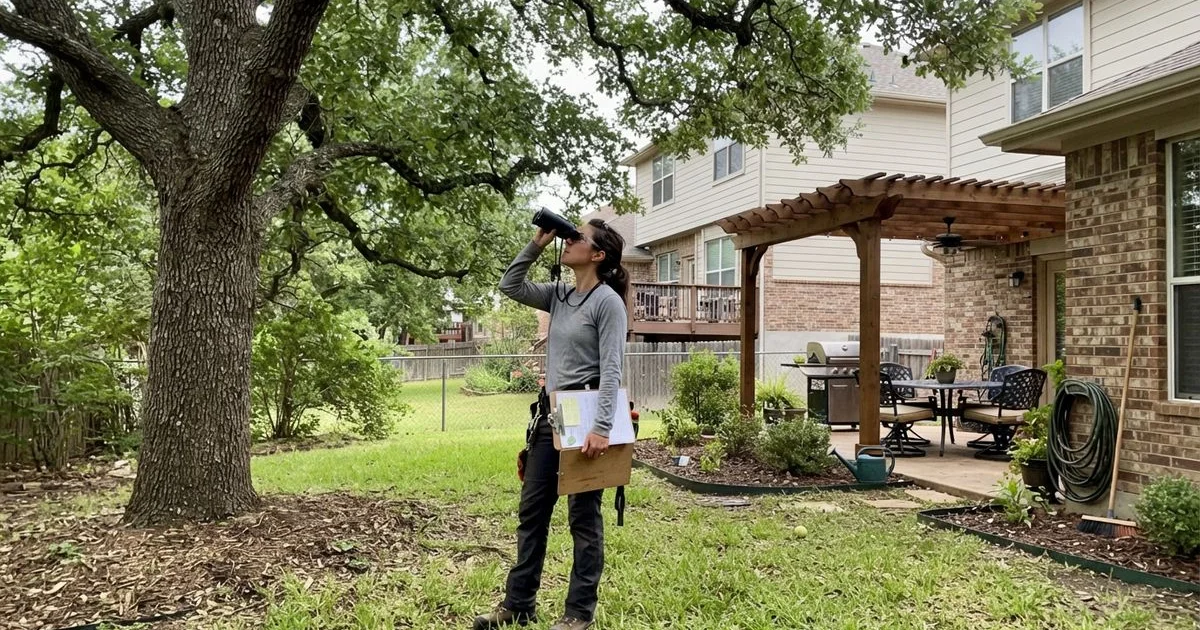
Storm damage from trees is rarely a total surprise if you look closely beforehand. Most failures happen at predictable weak points, deadwood, poor branch unions, roots already compromised by construction or disease, and a bit of seasonal prep goes a long way toward catching those before wind or heavy snow finds them for you.
A seasonal checklist
- Walk your property and look up. Check for deadwood, cracked limbs, or branches hanging at odd angles that weren’t there last year.
- Look at the base of each tree. Note any new lean, lifted soil, or exposed roots, especially near trees you’re relying on to stay standing through a storm.
- Check for storm-prone structural issues. Codominant stems and included bark, both common weak points, are worth having an arborist confirm if you’re not sure what you’re looking at.
- Clear gutters and roof debris so existing small branches and leaves don’t compound damage if larger limbs come down later.
- Schedule trimming before the season, not during it. Once storm warnings start, crews get booked out fast and prices for emergency work climb.
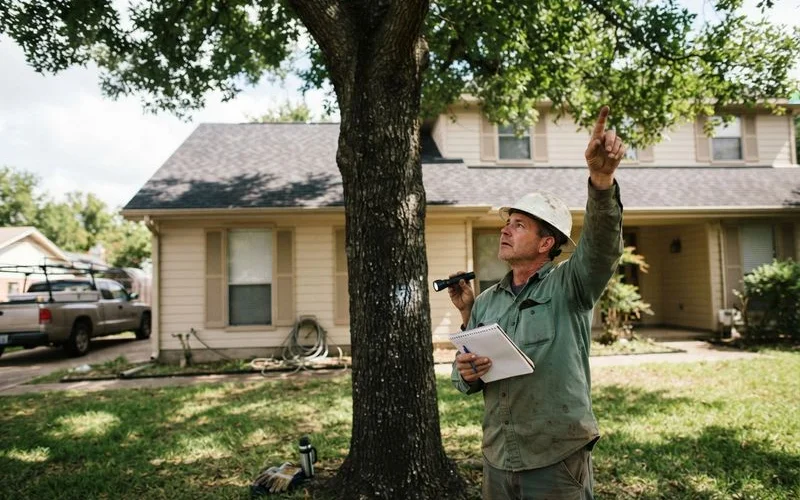
What to prioritize if you can only do one thing
If time or budget only allows for one step, focus on the trees closest to your house, garage, or driveway. A weak limb on a tree at the back of a large property is a lower priority than the same issue on a tree that could hit your roof.
| Priority | Action |
|---|---|
| High | Trees overhanging the house, garage, or driveway with visible deadwood or lean |
| Medium | Large trees near the property but not directly over structures |
| Lower | Trees on the far edge of the property, away from anything they could damage |
Why timing matters
Booking emergency and storm damage tree service work after a storm already hit means competing with every other homeowner in the county for the same limited crews, often at a premium for urgent scheduling. Getting a tree assessed or trimmed before storm season is generally both cheaper and faster, since it’s routine work rather than emergency response.
Signs you should get a professional inspection now
- A tree has a visible split, deep crack, or hollow-sounding trunk.
- You’ve noticed new leaning, especially with any soil disturbance at the base.
- A large limb is already hanging or partially broken from a previous wind event.
- The tree is large, mature, and positioned where a failure would hit your house, a neighbor’s property, or a power line.
Any of these is worth a call well before the next forecast storm, not after. If a storm already caught you before you got to any of this, our storm damage tree safety guide covers what’s safe to handle yourself and what isn’t.
Realistic expectations
Preparing your trees reduces risk, it doesn’t eliminate it. A severe enough storm can bring down a perfectly healthy tree. The goal of seasonal prep is removing the predictable weak points, so that when high winds do come through, you’re dealing with genuinely unpredictable damage rather than something a trim in September could have prevented.
Options for high-value or hard-to-replace trees
For a mature tree you especially want to keep, whether it’s providing shade over the house or has been on the property for decades, ask an arborist about supportive options beyond routine trimming. Structural support systems exist specifically for trees with a weak union or split trunk that are otherwise healthy and worth preserving rather than removing. These are a specialized service, not something every general tree crew offers, so it’s worth asking directly if you have a tree in this category.
Building a habit, not a one-time task
Storm prep works best as an annual routine rather than a one-time fix. A tree that passed inspection two years ago can develop new deadwood or a fresh crack in the meantime, especially after an intervening storm season of its own. Doing a quick visual walk-around each late summer, and calling in a professional look whenever something seems different from the year before, keeps the list of surprises small heading into fall and winter weather.
Our methodology explains how we evaluate the tree service companies in this directory, and the home page is a good place to start if you want an inspection scheduled before the next storm season.
FAQ
- When should I start preparing trees for storm season?
- Late summer into early fall is a good window, before the heavier wind events typically arrive. Waiting until a storm is already forecast usually means every crew in the area is booked solid.
- Does trimming a tree actually reduce storm risk?
- Yes, removing deadwood and thinning a dense canopy reduces the surface area wind can catch and removes the weakest points most likely to break first.
- Are certain trees more prone to storm damage than others?
- Trees with codominant stems, included bark, or existing deadwood are generally more vulnerable, along with any tree already leaning or showing root damage.
- Is a pre-storm inspection worth paying for?
- For a large, mature tree near your house, yes. An inspection can catch issues, like a hidden crack or a weak union, that aren't obvious from the ground.