Land clearing before building, subdividing, or landscaping a property
By Elena Okafor · Updated 2026-07-08
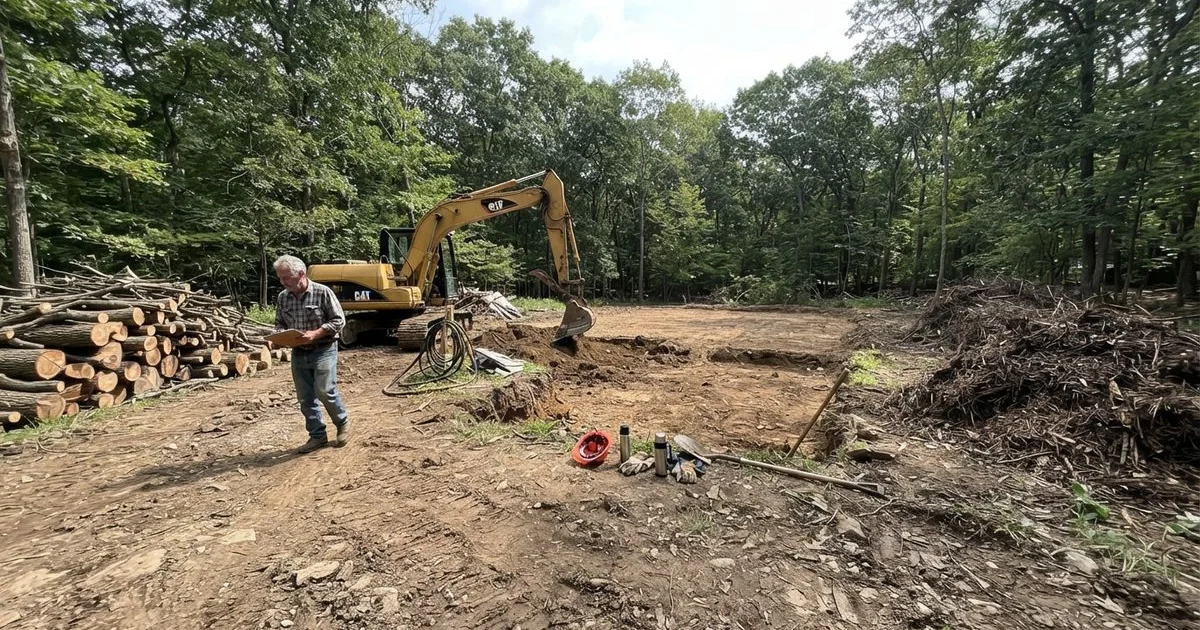
Clearing land for a new build, a subdivided lot, or a major landscaping overhaul is a different kind of job than removing a tree or two. It involves more coordination, more permitting questions, and more planning around what happens to the site once the vegetation is gone.
Start with permits and local rules
Many municipalities in Westchester County regulate tree removal and land clearing beyond a certain scale, particularly where wetlands, steep slopes, or a tree preservation ordinance are involved. This is the first call to make, before any land and lot clearing work begins, since clearing without a required permit can mean fines or delays to your broader project timeline. Requirements vary by town, so check directly with your local building or planning department rather than assuming your neighbor’s project followed the same rules.
Planning the sequence
Land clearing ahead of construction typically follows a rough order:
- Permitting and any required tree surveys, confirming what can be cleared and what needs to stay or be protected during construction.
- Clearing brush and smaller vegetation, usually first since it’s quicker and clears sightlines for the larger equipment work.
- Tree removal, sequenced to protect any trees you’re keeping, especially near property lines shared with neighbors.
- Stump grinding or removal, particularly in areas where a foundation, driveway, or septic system will go.
- Grading, to establish proper drainage before construction crews take over the site.
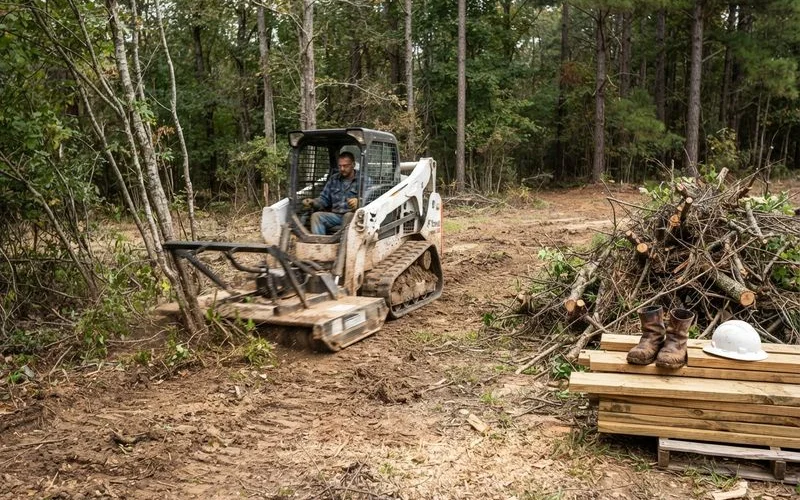
What changes the scope of the job
| Factor | Effect on the project |
|---|---|
| Lot size and vegetation density | Directly drives time and equipment needed |
| Trees to be preserved | Requires careful sequencing and possibly protective fencing |
| Slope and drainage | May require a grading plan alongside clearing |
| Access for heavy equipment | Tight or wooded access can slow the whole timeline |
Coordinating with your builder or contractor
If clearing is happening ahead of new construction, loop in your general contractor early. They’ll have opinions on exactly which areas need to be cleared first, where equipment staging should happen, and whether grading needs to happen immediately after clearing or can wait. A land clearing crew working from a plan the builder has already reviewed avoids the redone work that happens when the two teams aren’t talking to each other.
What to ask a land clearing company
- Are you familiar with local permitting requirements for a project this size?
- How do you handle protecting trees we want to keep, especially near the clearing boundary?
- What’s your plan for stump removal in areas where we’ll be building or grading?
- How is debris and cleared material handled, on-site chipping, hauling, or both?
Reviews across the region consistently point to fair pricing and thorough cleanup as strengths worth confirming before a larger project like this, since a clearing job that leaves the site messy or unevenly graded can create real headaches for the construction phase that follows.
Budgeting for the unexpected
Land clearing quotes are typically based on acreage and vegetation density, but site conditions like unexpected rock, wet ground, or a denser tree stand than initially visible can shift the scope once work begins. Building in some flexibility, and asking upfront how a company handles conditions that differ from the initial estimate, avoids surprises partway through.
Wetlands and environmentally sensitive areas
Some lots in Westchester County border wetlands, floodplains, or steep slopes with additional environmental review requirements beyond standard tree removal permitting. If your property has a stream, pond, or visibly wet low area anywhere near the section you’re planning to clear, raise this with your local planning department before signing a contract. A clearing company experienced with these reviews can often flag likely issues early, but the approval itself typically comes from the municipality or, in some cases, a state environmental agency, not the contractor.
Timing around the seasons
Clearing during the growing season means dealing with fuller vegetation and, on wetter sites, softer ground that can complicate equipment access. Many contractors prefer late fall through early spring for larger clearing jobs, when the ground is firmer and vegetation is easier to see through, though frozen ground in deep winter can occasionally slow certain grading work. Discuss timing with both your clearing crew and your builder, since a clearing schedule that doesn’t line up with the construction team’s mobilization date just adds an idle gap to the project. Our methodology explains how we evaluate the companies in this directory, and the home page is a good place to start comparing options for a project this size.
FAQ
- Do I need a permit to clear land before building?
- Often, yes, especially for larger lots, wetland-adjacent property, or municipalities with tree preservation ordinances. Check with your local building department before clearing begins, not after.
- How far in advance should land clearing happen before construction starts?
- Many projects clear a few weeks to a couple of months ahead, allowing time for stump removal, grading, and any required inspections before the building crew mobilizes.
- What happens to the cleared trees and brush?
- Most companies chip brush on-site and either haul out or leave larger logs depending on your preference. Ask about disposal and whether any material can be repurposed as mulch.
- Does clearing land affect drainage on the property?
- It can. Removing trees and vegetation changes how water moves across a lot, which is one reason a grading plan alongside clearing matters for larger projects.