Storm damage tree safety: what to leave to a professional crew
By Elena Okafor · Updated 2026-06-29
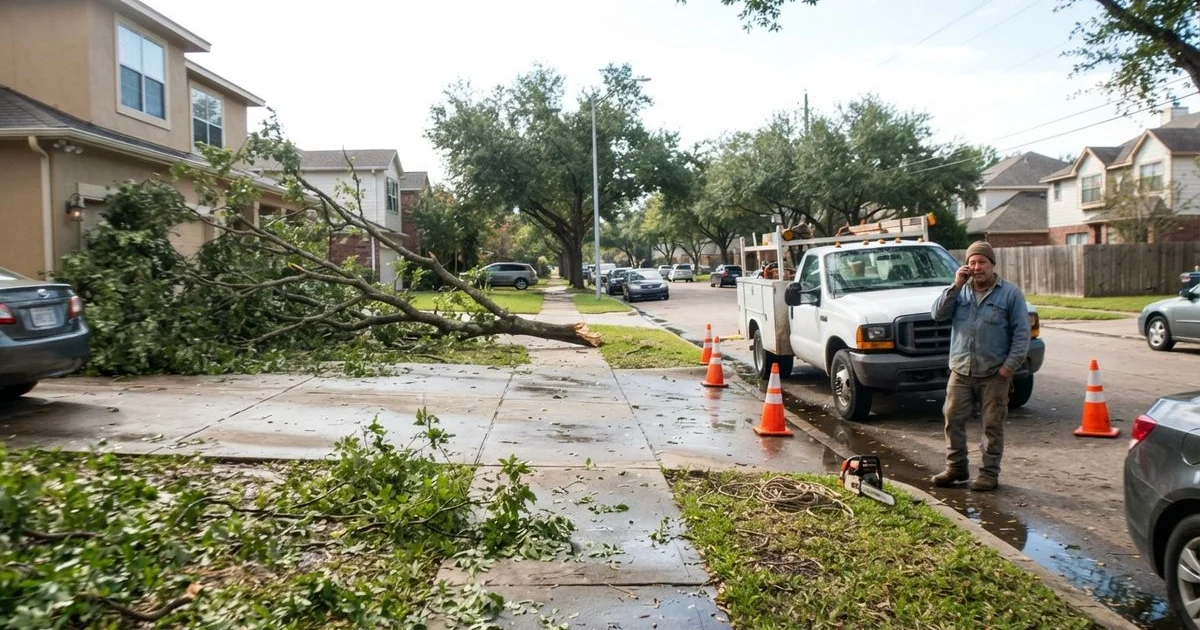
Storm damage sets off a strong instinct to clean up fast, especially when a tree has come down across a driveway or a yard. That instinct is exactly what leads to most storm-related tree injuries. A few clear rules about what’s safe to handle and what isn’t can keep a bad storm from turning into a worse day.
What’s actually safe to clean up yourself
- Loose branches and debris on open ground, away from any power line and not resting against a structure.
- Small limbs already fully detached from the tree, sitting flat on the ground.
- General yard debris like leaves, twigs, and small broken branches scattered by wind.
If you’re doing any of this, wear gloves and sturdy shoes, and keep an eye out for branches under tension that could snap back if disturbed.
What should always go to a professional
- Anything touching or near a power line. Treat every downed line as live until the utility company confirms otherwise, and stay well back from any tree or branch in contact with one.
- A tree or large limb leaning against your house, garage, or another structure. These are often under significant tension and can shift or fall further without warning.
- Partially attached, hanging limbs still connected to the tree above. These are sometimes called hangers, and they’re one of the more dangerous situations in storm cleanup because they can drop with no notice.
- Any large tree section you’d need a chainsaw to move. Chainsaw work on storm-damaged wood, which is often under unpredictable tension from the fall, is meaningfully more dangerous than routine cutting.
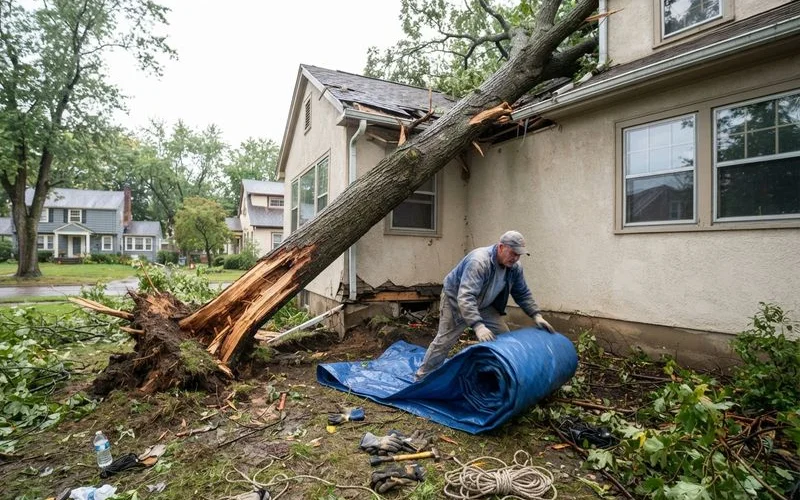
A quick safety checklist
| Situation | Safe for you | Call a professional |
|---|---|---|
| Small branches on open ground | Yes | - |
| Branch touching a power line | No | Yes, call the utility first |
| Tree leaning on the house | No | Yes |
| Hanging limb still attached above | No | Yes |
| General leaf and twig debris | Yes | - |
Before you touch anything: document the damage
If you plan to file a homeowners insurance claim, photograph the damage from several angles before anything is moved. Adjusters generally want to see the tree and any property damage in its original state, and cleanup that happens too early can complicate a claim. This is general guidance, not insurance or legal advice; check with your specific policy or provider for how they want damage documented.
After the immediate hazard is handled
Once anything touching a power line or leaning on a structure has been professionally addressed, remaining cleanup, hauling debris, grinding a stump left from a snapped trunk, or trimming back a damaged canopy, can usually proceed on a normal schedule rather than an emergency one. Reviews across the region consistently point to fast response times and safe work practices as what homeowners value most from a emergency and storm damage tree service crew during exactly this kind of situation.
When to call immediately versus when it can wait
A downed line, a tree resting on a structure, or a hanging limb over a walkway or driveway is an immediate call. A tree that’s simply lost some branches but is otherwise stable, away from structures and lines, can typically wait for a scheduled visit. When in doubt, treat it as urgent.
None of this replaces getting ready before the storm hits. Our storm season prep guide covers the steps that lower the odds you’re dealing with this kind of cleanup in the first place.
Working with your insurer during cleanup
If your insurer sends an adjuster out, it’s reasonable to ask whether it’s safe to begin any cleanup before they arrive, particularly if debris is blocking a driveway or entrance you need for daily life. Most insurers are fine with clearing an access path as long as you’ve documented the damage first with photos. Keep any receipts for temporary repairs, like a tarp over roof damage, since these are often reimbursable as part of a claim. If a tree company also does emergency board-up or tarping work, ask whether that’s billed separately from the tree removal itself, since it sometimes is.
After the immediate danger passes
Once a professional crew has cleared anything hazardous, do a second walk of the property in daylight, since adrenaline and poor lighting during or right after a storm can mean smaller issues get missed the first time through. Check for hanging debris in less obvious spots, like on a roof edge or tangled in a hedge, that didn’t register during the initial cleanup. Our methodology explains how we evaluate the companies in this directory, and the home page is where to find one quickly if you need help now.
FAQ
- Is it safe to remove a fallen branch myself after a storm?
- Small branches on the ground, away from power lines, are generally safe to clear yourself. Anything tangled in a power line, leaning on your house, or still partially attached overhead should wait for a professional.
- What if a tree is leaning on my house after a storm?
- Stay out of the rooms directly underneath it and call a professional crew rather than attempting to move or cut it yourself. A leaning tree under tension can shift unpredictably.
- Should I call the utility company or a tree service first?
- If any part of the tree or its branches are touching or near a power line, call the utility company first. They need to de-energize the line before anyone, including a tree crew, can safely work near it.
- Do I need to document damage before cleanup starts?
- Yes, if you plan to file an insurance claim. Take photos of the damage from multiple angles before anything is moved or cut, since adjusters typically want to see the original state.