Signs your tree is dying or hazardous, and what to do next
By Elena Okafor · Updated 2026-06-26
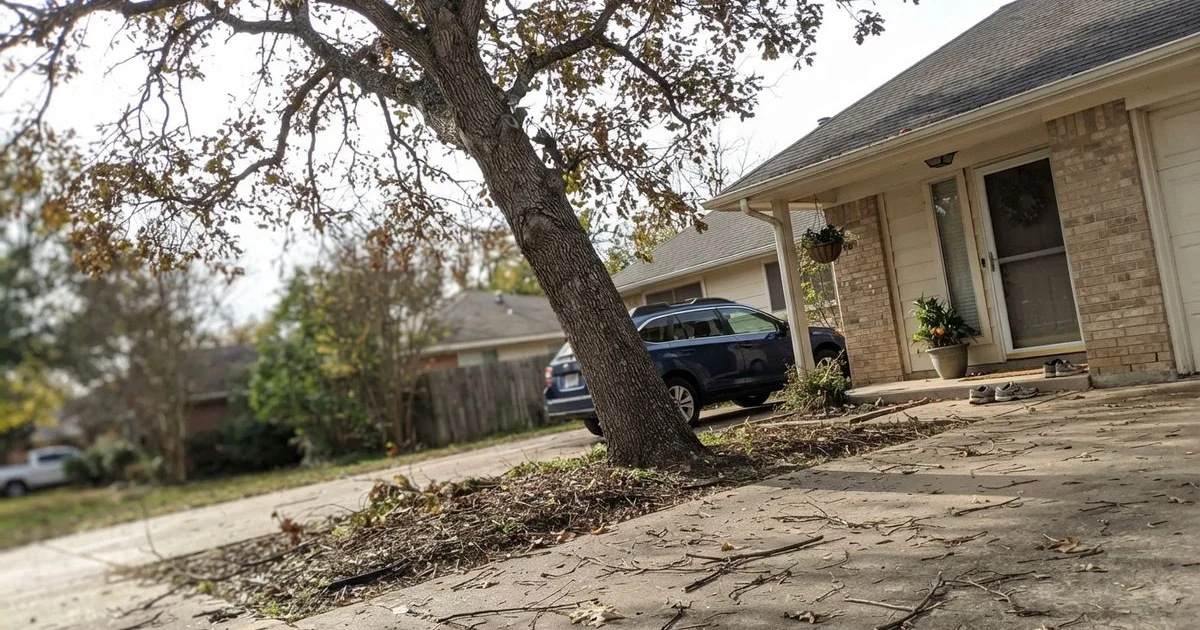
Most homeowners aren’t trained to diagnose a tree, and you don’t need to be. What you do need is a working sense of the signs that mean “keep an eye on it” versus “call someone this week.” A few visible clues do most of the work here.
Warning signs worth taking seriously
- Large sections of deadwood. Branches with no leaves in growing season, or bark that’s peeling and dry, especially if it’s spreading across more of the canopy each year.
- A new or worsening lean. A tree that has always leaned slightly is different from one that’s started tilting more, particularly if you notice soil lifting or cracking at the base.
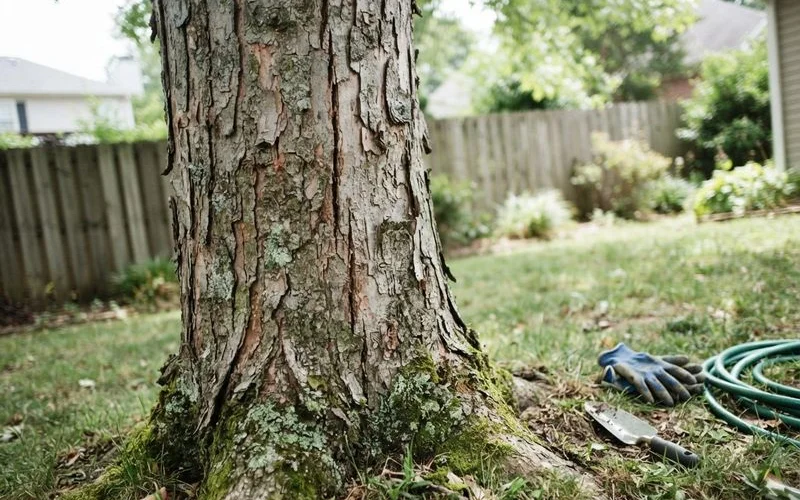
- Cracks or splits in the trunk. Vertical cracks, especially ones that run deep or seem to be opening wider, suggest structural weakness.
- Fungal growth at the base or on the trunk. Mushrooms or shelf-like fungus growing from the trunk or root area can point to internal decay, even if the tree still has leaves.
- Hollow sounds when tapped. A trunk that sounds hollow rather than solid when tapped can indicate significant internal rot.
- Root damage or exposed roots. Construction nearby, recent trenching, or roots that have been cut can destabilize a tree that otherwise looks healthy above ground.
None of these guarantee a tree is actively dangerous, but any of them is a reasonable trigger to get a professional opinion rather than wait and see through arborist and tree health services.
How urgent versus how concerning
| Sign | How urgent |
|---|---|
| A few dead branches in an otherwise healthy canopy | Worth monitoring, not usually urgent |
| Large lean that’s new or worsening | Get assessed soon |
| Trunk crack or hollow sound | Get assessed soon, especially near a house |
| Tree already leaning toward a structure with visible root lift | Treat as urgent |
What an assessment actually involves
An arborist evaluating a concerning tree is generally looking at the whole picture: the extent of deadwood, the direction and severity of any lean, root health, and signs of internal decay. This is the kind of judgment call that’s hard to make accurately from a homeowner’s vantage point on the ground, since a tree that looks fine from a distance can have significant internal issues, and one that looks alarming can sometimes be perfectly stable.
Why waiting can cost more than it saves
A hazard tree that gets addressed early is usually a straightforward removal or a corrective pruning job. The same tree, left alone through another storm season, can come down on its own timeline instead of yours, sometimes onto a roof, a car, or a power line. Emergency removal after a failure is also typically priced higher than a scheduled removal, on top of whatever damage the fall itself causes.
If you’re not sure whether what you’re seeing is a real concern, it costs little to have someone look. Reviews across the region consistently mention knowledgeable arborists and safe work practices as strengths worth looking for when you’re deciding who to call.
Seasonal signs versus real trouble
Timing matters when you’re reading a tree’s signals. A deciduous tree dropping leaves in fall is normal; the same tree holding brown, dried leaves through winter instead of dropping them, or leafing out late and thin in spring compared to its neighbors, is more worth noting. Evergreens browning from the inside out in a normal seasonal pattern is typical; whole branches or one whole side of the tree browning while the rest stays green usually points to a localized problem rather than normal seasonal change.
This is general guidance, not a diagnosis
The signs above are meant to help you decide whether to call someone, not to replace an in-person evaluation. Tree health and structural risk depend on specifics an arborist needs to see directly, including things that aren’t visible from the ground, like internal decay or root damage below the soil line. If you’re genuinely unsure whether what you’re looking at is a minor issue or a real hazard, that uncertainty itself is a reasonable enough reason to get a professional opinion rather than wait for a clearer sign. Our methodology explains how we evaluate the companies in this directory, and the home page is a good place to start if you need an assessment soon.
FAQ
- How can I tell if a tree is dead or just dormant?
- Scratch a small section of bark on a twig. Green underneath means the branch is alive; brown and dry means that section is dead. Check a few spots, since one dead branch doesn't always mean the whole tree is gone.
- Is a leaning tree always dangerous?
- Not necessarily. Some trees grow with a natural lean their whole lives. A new or worsening lean, especially with soil lifting at the base, is the more concerning sign than a lean that's been stable for years.
- Do mushrooms growing near the base of a tree mean it's dying?
- Fungal growth at the base or on the trunk can be a sign of internal decay, though not always. It's worth having an arborist take a look rather than assuming either way.
- How urgent is it to deal with a hazardous tree?
- If the tree could hit a house, driveway, or area people regularly use, treat it as a priority rather than something to schedule for next season, especially heading into storm season.