Who's liable when a tree falls on a neighbor's property in Westchester County
By Elena Okafor · Updated 2026-07-11
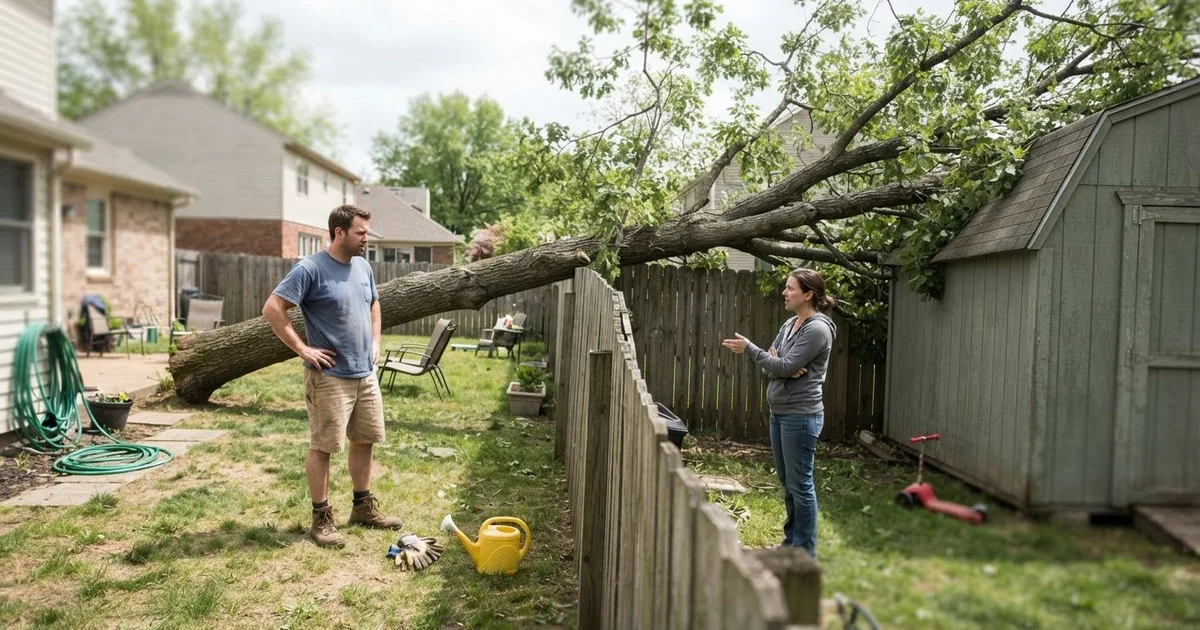
A tree falling across a property line is one of the more common neighbor disputes in Westchester County, and also one of the more misunderstood. Most people assume whoever owned the tree automatically owes for the damage. In practice, it usually comes down to whether the tree’s condition and the owner’s awareness of it made the fall foreseeable.
This is general information, not legal advice. For a specific dispute or claim, talk to your insurance provider or an attorney familiar with New York property law.
The general rule: foreseeability matters
In most cases, a tree owner is more likely to bear responsibility if the tree was visibly dead, diseased, or hazardous before it fell, and the owner knew or reasonably should have known about it. A healthy tree that comes down in a genuine storm, with no prior warning signs, is typically treated differently, closer to an act of nature than a failure to maintain the property.
This is why documentation matters. If you’ve noticed a neighboring tree looking hazardous, a written note of when you raised it, even an informal text or email, can matter later if the tree does fall and a dispute follows.
What insurance usually covers
Homeowners insurance, on either side of the property line, often responds to storm and tree damage regardless of whose tree caused it, though the details vary significantly by policy and insurer. It’s worth reviewing your own policy’s specific tree damage language rather than assuming coverage works a particular way. If a dispute over liability arises separately from the insurance claim itself, that’s typically a conversation between insurers, or in more serious cases, between attorneys.
A general comparison
| Scenario | Typical liability picture |
|---|---|
| Healthy tree fails in a storm | Usually treated as an act of nature, less likely to fall on the tree owner |
| Visibly dead or hazardous tree, no action taken | More likely to point toward owner liability |
| Owner warned about the tree in writing, did nothing | Documentation strengthens a liability claim against the owner |
| Tree damaged by construction or utility work, then falls | May shift some responsibility toward the party that caused the damage |
This guide is about what happens once a tree has already come down. If the issue is a living tree with branches or roots crossing onto your property, not one that’s already fallen, see our guide on property line and overhanging branch disputes instead.
If you’re worried about a neighboring tree
- Document your concern. A dated photo or a written message to your neighbor noting the tree’s condition creates a record if things escalate later.
- Suggest a professional assessment. A neutral arborist’s evaluation can settle a disagreement about whether a tree is actually hazardous, which is more persuasive than two neighbors disagreeing informally.
- Talk to your insurer before anything happens, not just after, so you understand what your specific policy covers regarding neighboring trees.
If a tree has already fallen
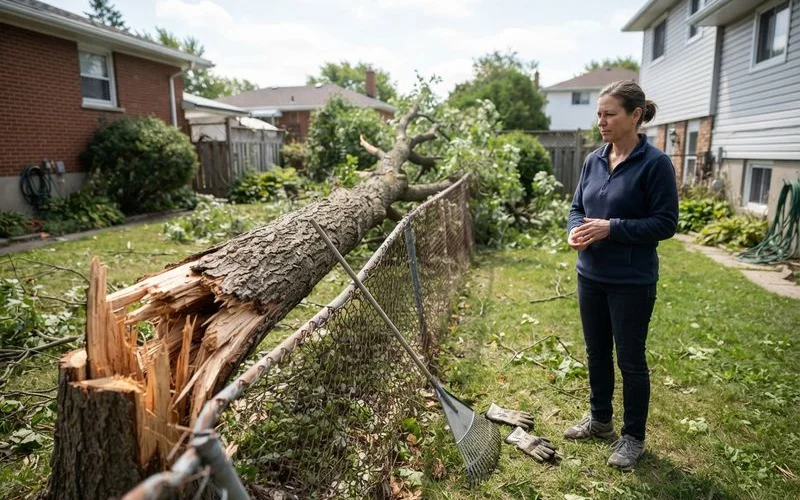
Photograph the damage before anything is cleared, and contact your insurer promptly. If liability becomes a point of disagreement between you and your neighbor, a documented pre-fall condition, from either side, tends to matter more than after-the-fact opinions about how healthy the tree looked.
Getting a professional risk assessment on a concerning tree, before it becomes a dispute, is usually the more efficient route regardless of how liability eventually shakes out.
A worked example
Say your neighbor’s large maple has a visible split in the trunk that you’ve noticed for months. You mention it to them in passing, and nothing changes. Six months later, it fails in a windstorm and lands on your fence. In a dispute over who pays, the fact that the tree had a visible, known defect before it failed, combined with the fact you raised it, generally works against the tree’s owner more than if the same tree had looked perfectly healthy right up until the storm. This is why an informal conversation, followed up with something in writing even briefly, is worth the small effort it takes.
Insurance versus liability: two separate tracks
It helps to keep these two questions apart. Your insurance claim is about getting your own property repaired, and it often moves forward regardless of whose tree caused the damage or why. Liability, whether your neighbor (or their insurer) ultimately owes you or your insurer for the loss, is frequently settled separately, sometimes between the two insurance companies directly rather than between the neighbors themselves. Understanding that these run on different tracks helps avoid the frustration of feeling like a claim is “stuck” while a liability question gets sorted out in the background.
Our methodology explains how we evaluate the tree service companies in this directory, and the home page is a good place to find one for an assessment.
FAQ
- Am I automatically liable if my tree falls on my neighbor's house?
- Not automatically. Liability generally depends on whether the tree's owner knew or should have known it was hazardous before it fell. A healthy tree that fails in a storm is usually treated differently than a visibly dead or hazardous one that was ignored.
- Does homeowners insurance cover a neighbor's tree falling on my property?
- Often, yes, through your own policy, regardless of whose tree it was, though this varies by policy and insurer. Check your specific coverage rather than assuming.
- What if I warned my neighbor their tree looked hazardous and they did nothing?
- Documented warnings can matter if a dispute over liability follows. Keeping a record, an email, a text, or notes on a conversation, is worth doing if you've raised a concern about a neighboring tree.
- Should I get an arborist's opinion before a dispute escalates?
- A professional risk assessment can document whether a tree was hazardous before it fell, which is useful if liability becomes a question. It's a reasonable step before things become adversarial.