Property line and overhanging branch disputes: what homeowners can do
By Elena Okafor · Updated 2026-07-14
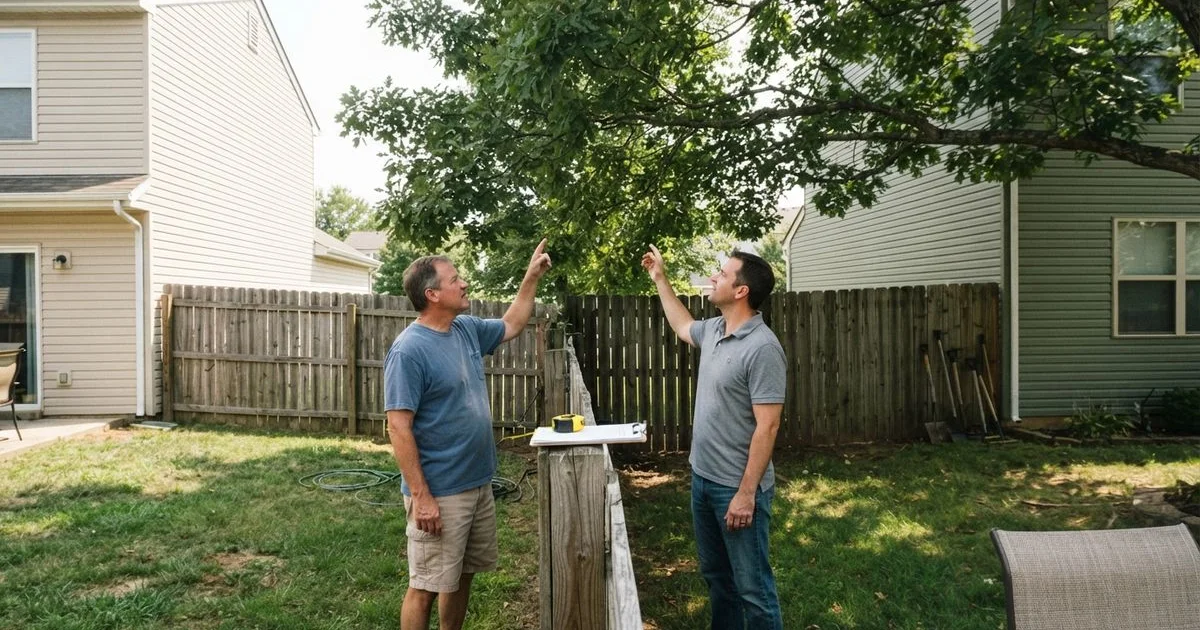
Overhanging branches and boundary-line trees generate more neighbor friction than almost anything else in residential life, mostly because people aren’t sure what they’re actually allowed to do. There are some general principles that apply in most situations, along with real limits on what a homeowner can do without a neighbor’s involvement.
This is general information, not legal advice. Boundary and property disputes vary by local jurisdiction; talk to an attorney for a situation involving real money or an ongoing conflict.
Overhanging branches: what you can generally do
A common principle, sometimes called self-help trimming, allows a property owner to cut back branches or roots that cross onto their land, up to the property line, without needing the neighbor’s permission. There are real limits, though:
- You typically cannot enter your neighbor’s property to do the trimming.
- You generally cannot cut in a way that kills the tree or causes serious damage, even if the offending growth is technically on your side of the line.
- Local ordinances, especially around protected or landmark trees, can add restrictions beyond this general principle.
If a branch is large enough that removing it safely is not a DIY job, that’s a case for a professional trimming crew rather than attempting it yourself near a property line.
This guide covers a tree that’s still standing. If the tree has already come down onto your property, that’s a separate liability question rather than a boundary dispute, and our guide on who’s liable when a tree falls on a neighbor’s property covers how that generally gets sorted out.
Trees growing directly on the boundary line
A tree whose trunk straddles a property line is often treated as jointly owned by both neighbors, which generally means neither side can remove or significantly alter it without the other’s agreement. This is one of the more common sources of dispute, particularly when one neighbor wants a boundary tree gone and the other doesn’t.
A general overview
| Situation | General approach |
|---|---|
| Neighbor’s branches overhang your yard | Self-help trimming to the property line is typically allowed |
| Tree trunk sits directly on the boundary | Often treated as jointly owned; removal usually needs agreement |
| Roots damaging your property | More complex; a professional or legal opinion is often warranted |
| Neighbor refuses to address a hazardous tree | Document the issue and consider mediation before legal action |
Roots crossing the property line
Root-related disputes tend to be more complicated than overhanging branches, since roots can affect drainage, foundations, or shared structures in ways that are harder to resolve with a simple trim. If tree roots are damaging a fence, driveway, or structure, an arborist’s assessment of the actual cause is a useful first step before assigning responsibility, especially since not every crack or lift near a tree is actually root-caused.
If a disagreement isn’t resolving informally
- Get a neutral third-party opinion. An arborist assessment that isn’t hired by either “side” can settle disputes about whether a tree is actually hazardous or actually causing damage.
- Put concerns in writing. A dated letter or email documenting the issue and the request creates a record if the situation escalates.
- Look into local mediation services before heading straight to legal action. Many municipalities offer this for exactly this kind of neighbor dispute.
- Consult an attorney if the dispute involves significant cost or an ongoing refusal to act.
Most tree-related neighbor disputes resolve without lawyers once both sides get a clear, professional read on the actual condition of the tree in question.
A common scenario, worked through
Say a neighbor’s oak overhangs your driveway, and falling leaves and small deadfall have become a recurring annoyance. You’re generally within your rights to trim branches back to the property line yourself, or hire someone to do it, without asking permission first. What you can’t do is decide the whole tree should come down because you find it inconvenient, since it isn’t yours to remove. If the branches are large enough that DIY trimming feels risky, hiring a professional to handle just the overhang, rather than attempting it yourself near a driveway or parked cars, is the more practical route regardless of whose tree it technically is.
Keeping it from becoming adversarial
Most of these situations start as simple annoyances and only turn into real disputes when one side feels ignored or dismissed. A short, friendly conversation before any cutting or legal letters often resolves more than people expect, especially when it’s paired with a clear, specific ask rather than a vague complaint. Saving that conversation as a written follow-up, even a casual text summarizing what was discussed, gives you a record without needing to make the exchange feel confrontational.
Our methodology explains how we evaluate the companies in this directory, and the home page is a good place to start if you need a professional opinion.
FAQ
- Can I cut branches from my neighbor's tree that hang over my yard?
- Generally, yes, up to your property line, using what's often called self-help trimming. You typically cannot go onto your neighbor's property to do it, and you cannot cut in a way that kills or seriously damages the tree.
- Who owns a tree growing directly on the property line?
- Trees growing on a boundary line are often treated as jointly owned, meaning both neighbors may need to agree before it's removed or significantly altered. This varies by jurisdiction, so confirm specifics for your situation.
- Am I responsible for damage from my neighbor's tree roots?
- It depends on what the roots are doing and where. Root damage to a shared structure or utility line is a more complex question than an overhanging branch, and often benefits from a professional or legal opinion for anything beyond a minor issue.
- What if my neighbor refuses to trim a tree that's damaging my fence?
- Talking to a neutral arborist first can help establish whether the tree is actually causing the damage. If your neighbor still won't act, local mediation services or small claims court are common next steps before a larger legal dispute.